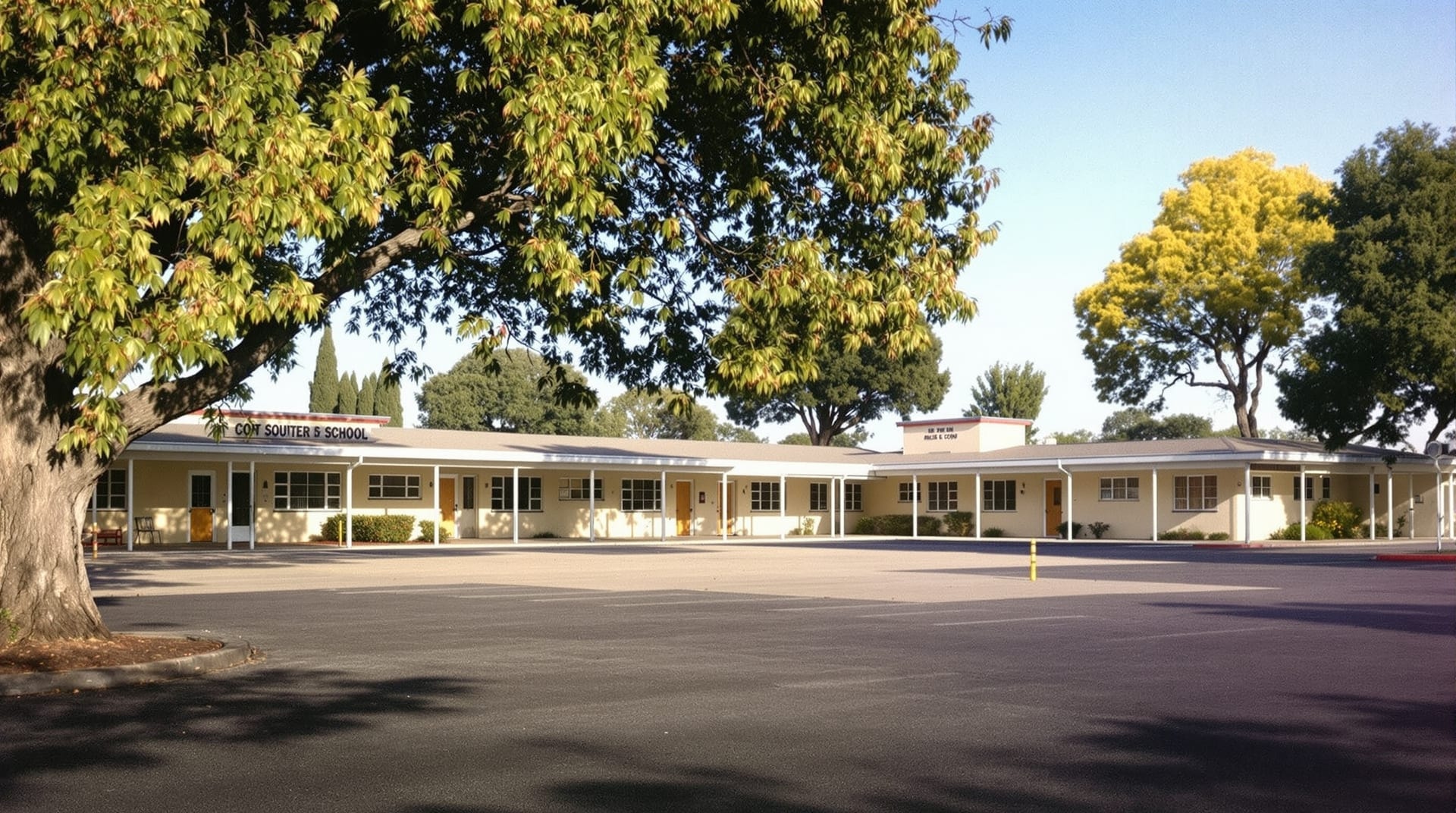
This page explains the structure and how to verify assignment. It deliberately does not rank or rate schools: performance data changes annually, single measures are poor summaries of a school, and the state publishes the underlying information so you can look at it directly.
More than one district serves the city
Riverside is not covered by a single unified school district. Two districts account for most of the city, and portions of neighbouring districts extend into parts of it:
- Riverside Unified School District serves a large share of the city, including much of the older grid, the central neighborhoods and the eastern and southern areas.
- Alvord Unified School District serves the western part of the city and adjacent unincorporated areas.
- Adjacent districts extend into peripheral portions of the city and the surrounding unincorporated county.
Because these boundaries were drawn on their own logic, an address on one side of an arterial can be assigned differently from an address on the other. Neighborhood names carry no reliable information about assignment.
How assignment actually works
Each district divides its territory into attendance areas — one for each elementary, middle and high school — and a residential address falls into exactly one at each level. On top of that:
- Boundaries change. Districts redraw attendance areas as enrolment shifts and as schools open, close or change configuration.
- Programs of choice exist. Magnet programmes, specialist academies, dual-language programmes and virtual or independent-study options operate under their own admission rules, often by application and sometimes by lottery.
- Intradistrict and interdistrict transfers exist but are governed by policy and capacity, not by preference. A transfer that is available this year may not be next year.
- Charter and private schools operate independently of attendance areas entirely.
The consequence for a home purchase is simple: verify the current assignment for the exact address, in the current year, with the district itself, and treat anything a listing or a third-party site says as an unverified starting point.

How to verify — the correct order
- Establish which district the address is in. Districts publish boundary maps and address lookup tools. If the address is near a boundary, confirm rather than infer.
- Look up the specific attendance area for each level your household needs. Elementary, middle and high school areas are drawn separately and do not nest neatly.
- Ask about capacity. An assigned school that is at capacity may place new enrolments elsewhere. This is a question for the district office, and it is worth asking before making an offer.
- Check the school's own data rather than a rating. The California Department of Education publishes enrolment, staffing, programme and assessment data for every public school in the state, and the state's school accountability reporting presents multiple measures side by side instead of collapsing them into one score.
- Visit. Districts and individual schools generally accommodate prospective-family visits. Fifteen minutes in a building tells you things no dataset does.
Beyond secondary school
Riverside has an unusually deep public higher-education presence for a city its size. Riverside City College, founded in 1916, is among the oldest community colleges in California and serves both transfer-track and vocational students. The University of California, Riverside is a full research campus on the eastern side of the city, with origins in the citrus research station described on the history page. Additional private institutions also operate locally, and the county office of education coordinates services across districts.
For a household with older children, the practical significance is that a full transfer pathway — community college to university — exists inside the city, without relocation.
Questions worth asking the district
- Which schools are currently assigned to this exact address, at each level?
- Has this attendance area been redrawn in the last few years, or is a change under consideration?
- Is the assigned school currently accepting new enrolment at the relevant grade, or is it over capacity?
- What programmes of choice are available to a resident of this area, and what are the deadlines?
- What transport is provided, if any, and at what distance does eligibility begin?
The short version
Do not buy a house on an assumption about schools. Confirm the district, confirm the attendance area for the exact address, ask about capacity, and read the state's own data rather than a composite rating. Every one of those steps is free and takes an afternoon; the alternative is discovering the answer in August. For how school boundaries interact with what a home is worth, see home values.